
We Are Church Intl.

News and Media Releases

Latest News

Signs of the Papal Times – an Assessment of the New Papacy


Thank you to Dr Paul Collins for permission to reproduce this article.
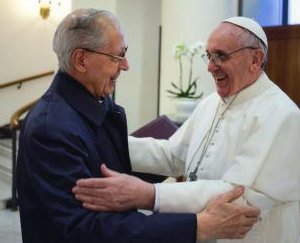
 

At first all we had to go on were the signs. The first sign was when Pope Bergoglio defined himself by taking the name Francis after the rich man from Assisi who repudiated his wealth to live like Christ, the poor man who had nowhere to lay his head. Then we saw a pope who 'dressed down' without the ermine lined, red mozzetta (the short cape worn over the shoulders) and the metres of lace that had characterised the previous papacy. Francis has rejected the trappings of 'royalty' moving out of the papal palazzo and into the quite modest, motel-like and accessible Casa Sancta Marta in the Vatican grounds. All the signs pointed not only to a different style but to a substantial change in direction.


Five weeks into his papacy Francis has moved-on from signs and now squarely faces tackling the hard issues. So far (21 April 2013) he has only appointed eleven bishops and seven of these would have been in the appointment system well before he was elected. But Francis has personally appointed two: Mario Aurelio Poli, 65, to replace him in Buenos Aires and Jose Rodriguez Carballo, OFM, 59, former minister general of the Franciscans and President of the International Union of Superiors General, who has been appointed Secretary to the Vatican congregation that oversees religious orders. What are these men like?

Read more: Signs of the Papal Times – an Assessment of the New Papacy

WOC Media release about LCWR

WASHINGTON D.C. - One year ago today, the Leadership Conference of Women Religious (LCWR), an umbrella group representing 80% of the 57,000 nuns in the
 United States, came under fire from the Vatican's Congregation for the Doctrine of the Faith for their social justice ministries and not supporting the U.S. bishops' agenda of attacking expanded healthcare, women's ordination, and same-sex marriage.

LCWR described the assessment as "based on unsubstantiated accusations and the result of a flawed process that lacked transparency," causing "pain and scandal in our church."

On Monday, Pope Francis reaffirmed the censure.

"While Pope Francis presents a fresh face in Vatican City, breaking from papal tradition by washing the feet of two women on Holy Thursday, for example, without dismissing the mandate against the nuns such symbolism appears meaningless at best and hypocritical at worst," stated Erin Saiz Hanna, spokesperson for the Nun Justice Project and Executive Director of the Women's Ordination Conference.

"Catholics around the country have been inspired by the faith and work of the sisters and will continue to support them; we urge Pope Francis to recognize their commitment and contributions and dismiss the mandate," said Jim FitzGerald, spokesperson for the Nun Justice Coalition and Executive Director of Call To Action.

Last summer, nearly 70,000 Catholics signed a Change.org petition and hundreds organized vigils to rally around the sisters.

"The pope intentionally chose St. Francis as his namesake," continued Hanna. "St. Francis of Assisi's sacred friendship with St. Clare is well documented. He wrote a promise of mutual respect for her and for the women who joined her community. St. Francis worked collaboratively alongside his sisters rather than against them. We expect Pope Francis to do the same."
 

Forum Social Mondial (World Social Forum)


Vittorio Bellavite, We Are Church (Italy), and François Becker, FHEDLES, represented us at the World Social Forum. A flavour of the gathering is in the video.


Teresa Forcades: "The great changes in the Church come from below, not from the Pope"

During an interview with Iglesia Descalza, Sr Teresa Forcades was asked


So, don't you think the time has come for the "necessary renewal" of the Church which you advocate in your book?


She replied: Any change in history, both at the church and the societal level, has started from below. When John XXIII was chosen, for example, there were already renewal movements like Nouvelle Théologie in France and the Movimiento Litúrgico, which was very important here in Montserrat. Well, I see something similar happening now: constructive and faithful criticism is rising from the grassroots so that -- I don't know if it will be this pope -- but the time will come when it can't be ignored.


Read the rest of the interview