COMUNICADO DE PRENSA, 2 de julio de 2017
Somos Iglesia Internacional celebra el nombramiento del Arzobispo Luis Ladaria como nuevo Prefecto de la Congregación para la Doctrina de la Fe, con la esperanza de que introducirá transparencia, justicia y misericordia en la CDF. La decisión de un cambio al más alto nivel de la CDF puede verse también como un avance en la reforma de la Curia. Sin embargo, Somos Iglesia Internacional afirma: “La Curia vaticana dedica demasiada energía a proteger y preservar el poder institucional. Esto solamente cambiará cuando haya una incorporación plena de los laicos, especialmente, de las mujeres, en la Iglesia y su misión. Se necesita urgentemente un cambio sustantivo en nuestra Iglesia.” Somos Iglesia Internacional pide al nuevo prefecto que levante las sanciones existentes contra teólogos/as como signo de una nueva era de justicia en la Iglesia, y que abra y apoye el intercambio vivo de posturas teológicas sin la prohibición del pensamiento.
Somos Iglesia Internacional ya pidió el relevo del Cardenal Müller como Prefecto de la CDF el 6 de marzo de 2017. El Cardenal Müller ha apoyado a la curia conservadora que está luchando para retener el poder y el control y está bloqueando las reformas del Papa Francisco para hacer que la Iglesia sea más misericordiosa, a imagen de Cristo.
El Cardenal Müller
.- rehusó la petición de la Comisión Pontificia de Abusos para que todas las cartas de las víctimas tuvieran respuesta.
.- rechazó que se instaurase un tribunal para investigar y censurar a obispos que hayan encubierto abusos.
.- rehusó cambiar los procesos utilizados para investigar a sacerdotes y religiosos, que son injustos y que incumplen la justicia natural.
.- rechazó apoyar los cambios para que las personas divorciadas que han vuelto a casarse puedan recibir la comunión sobre la base de la Exhortación Amoris Laetitia del Papa Francisco.
Sigrid Grabmeier, coordinadora general de Somos Iglesia Internacional, dice: “Es lógico que el Papa Francisco no haya prolongado el mandato de cinco años del Cardenal Gerhard Müller. Repetidamente, el Cardenal Müller se ha situado a sí mismo como un profesor para el Papa a través de sus enseñanzas e interpretaciones del papado, que pueden leerse en su libro reciente “El Papa”. Un cambio en la CDF también representa una oportunidad valiosa de reorientación de la importante tarea del procesamiento de la violencia sexual de clérigos”.
Contacto: Sigrid Grabmeier, Somos Iglesia Internacional, This email address is being protected from spambots. You need JavaScript enabled to view it.
Somos Iglesia Internacional se fundó en Roma en 1996 y es una coalición global de grupos católicos de reforma de distintos países. Está comprometida en la renovación de la Iglesia Católica Romana basada en el Concilio Vaticano II (1962-1965) y en el espíritu teológico desarrollado a partir de él.
http://www.we-are-church.org


 Reform of the Vatican’s finances has been a top priority for Pope Francis. However, after some initial successes he has now suffered several serious reverses:
 The so-called “Filial Correction on the Propagation of Heresies” directed towards Pope Francis and signed by 62 individuals represents the desperate complaints of a tiny group of extremist conservatives, according to We Are Church International, a coalition of 21 Catholic Church reform organizations from around the globe.
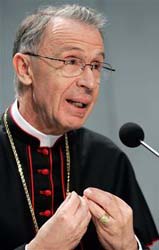 We Are Church International welcome the appointment of Archbishop Luis Ladaria SJ as the new Head of the CDF hoping he will introduce transparency, justice and compassion in the CDF. The decision on a change at the top of the CDF is also seen as progress in reform of the curia. Nevertheless We Are Church International states: “The Vatican curia devotes too much energy to protect and preserve institutional power. This will only change when there is a full blossoming of laypeople and especially women’s involvement in the church and its mission. Substantive change in our Church is urgently needed.” We are Church international calls on the new prefect to rescind all sanctions against theologians as a sign of a new era of justice in the Church and to open and support the vivid exchange on theological positions without ban of thinking.